


AMV Hospitals

Varicocele Treatment in Hyderabad

Years of Experience
0 +
Successful Surgeries
0 +
Happy Families
0 +

What is Varicocele

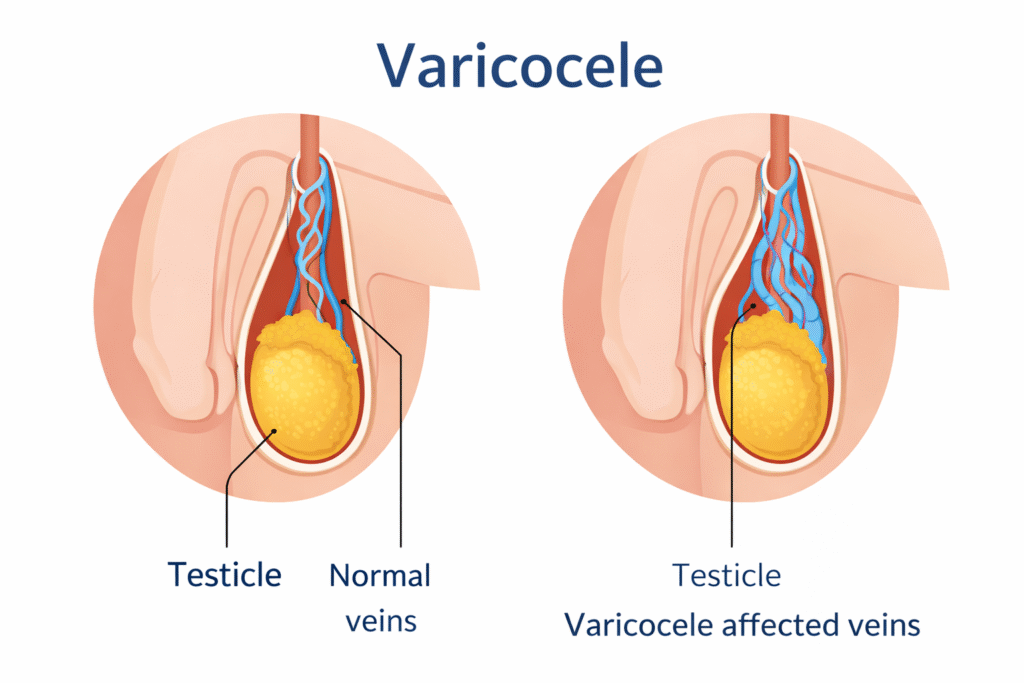
Varicocele is a medical condition in which the veins inside the scrotum (the skin pouch that holds the testicles) become abnormally enlarged and twisted. These veins are responsible for carrying blood away from the testicles, and when they dilate, they resemble varicose veins commonly seen in the legs.

In many men, varicocele causes no noticeable symptoms and may go undetected for years. However, in some cases, it can lead to testicular discomfort, heaviness, reduced sperm quality, or male infertility, making timely diagnosis and treatment important.

Varicocele

Grades of Varicocele

Varicocele is classified into different grades based on the size of the enlarged veins and how easily they can be detected during examination. Understanding the grade helps doctors decide the severity of the condition and the most appropriate treatment plan.

In Vitro Fertilization in Hyderabad

Grade I Varicocele
(Small or Subclinical)

Grade I varicocele is the mildest form of the condition. At this stage, the enlarged veins are not noticeable during a routine examination. They can only be felt when the patient performs a Valsalva maneuver, such as straining, coughing, or bearing down. This grade usually causes no visible swelling or significant discomfort, but it may still affect sperm quality in some cases.

Grade II Varicocele (Moderate)

A Grade II varicocele is easily felt without any special maneuver. The enlarged veins can be detected by gently examining the scrotum while standing. Although the veins are not clearly visible, patients may experience symptoms such as dull scrotal pain, heaviness, or fertility concerns. Medical evaluation is recommended at this stage.

Grade III Varicocele (Large or Severe)

Grade III is the most advanced stage of varicocele. The enlarged veins are clearly visible through the scrotal skin and can be felt easily without pressing. The scrotum may appear swollen or irregular due to significantly dilated veins.

This grade is more likely to cause pain, testicular changes, and male infertility, and treatment is often advised

Symptoms of Varicocele

Varicocele often develops gradually and may not cause noticeable symptoms in many men. When symptoms are present, they can vary depending on the severity of the condition.

  • Dull or aching scrotal pain that may worsen after prolonged standing, physical activity, or at the end of the day
  • Heaviness or dragging sensation in the scrotum, especially during long periods of sitting or standing
  • Enlarged or twisted veins in the scrotum that can be felt during examination, sometimes described as a “bag of worms”
  • Visible swelling of scrotal veins, particularly in moderate to severe cases of varicocele
  • Discomfort that improves when lying down, as blood flow pressure reduces
  • Reduced size of the affected testicle in rare or advanced cases due to prolonged vein enlargement

Causes of Varicocele

The exact reason why varicocele develops is not always known. However, several underlying factors are believed to play a role in causing the enlargement of veins within the scrotum.

In Vitro Fertilization in Hyderabad

Weak or Malfunctioning Venous Valves

Improper functioning of valves in the spermatic veins allows blood to flow backward, causing pooling and increased pressure within the veins instead of efficient movement toward the heart.

Genetic or Hereditary Factors

A family history of varicose veins or varicocele significantly increases the risk of developing the condition due to inherited vein structure or valve weakness.

Impaired Testicular Blood Circulation

Abnormal or restricted blood flow in the testicular veins can lead to progressive vein dilation and enlargement over time

In Vitro Fertilization in Hyderabad

Increased Abdominal Pressure

Activities such as heavy lifting, chronic coughing, constipation, or prolonged straining raise intra-abdominal pressure, negatively affecting venous blood return from the testicles.

Hormonal Imbalances

Disruptions in hormone levels, particularly those influencing blood vessel tone and testicular function, may contribute to vein dilation and varicocele development.

Nutritional Deficiencies

A lack of essential nutrients that support vascular health and circulation can weaken blood vessels, increasing susceptibility to venous disorders.

Complications of Varicocele

Although varicocele is often a benign condition, leaving it untreated in some cases may lead to health concerns that can affect male reproductive function and testicular health.

  • Male infertility: Varicocele is one of the leading and treatable causes of infertility in men. The enlarged scrotal veins can raise the temperature around the testicles, which may negatively impact sperm production, sperm motility, and overall sperm quality. Over time, this can reduce the chances of natural conception.

  • Testicular atrophy (shrinkage): In advanced or long-standing cases, varicocele may interfere with normal blood flow and oxygen supply to the testicles. This can cause gradual damage to testicular tissue, leading to a reduction in testicle size and impaired function.

How is Varicocele Diagnosed?

Varicocele is diagnosed through a combination of clinical evaluation and imaging tests. At AMVI Hospital, Hyderabad, specialists follow a thorough diagnostic approach to accurately assess the condition and its impact on fertility and testicular health.

The diagnostic process begins with a detailed discussion of symptoms. The doctor may ask about:

  • Scrotal pain or discomfort
  • Fertility concerns or difficulty conceiving
  • Changes in testicle size or consistency
  • Past medical conditions, surgeries, or treatments

This information helps determine whether varicocele may be contributing to the symptoms.

A physical examination is a key step in diagnosing varicocele. The doctor examines the scrotum while the patient is both standing and lying down to identify enlarged or twisted veins along the spermatic cord.

A Valsalva maneuver may be performed, where the patient is asked to strain gently, as this can make smaller varicoceles more noticeable.

Clinically detected varicoceles may require treatment depending on semen analysis results and symptom severity.

A scrotal Doppler ultrasound is the most reliable imaging test used to confirm varicocele. It allows doctors to:

  • Visualize blood flow within the scrotal veins
  • Detect dilated veins and reflux of blood
  • Assess the grade and severity of varicocele
  • Evaluate its effect on testicular circulation

High-grade (Grade 3 or 4) varicocele identified on Doppler ultrasound may require treatment if semen parameters are abnormal.

About doctor

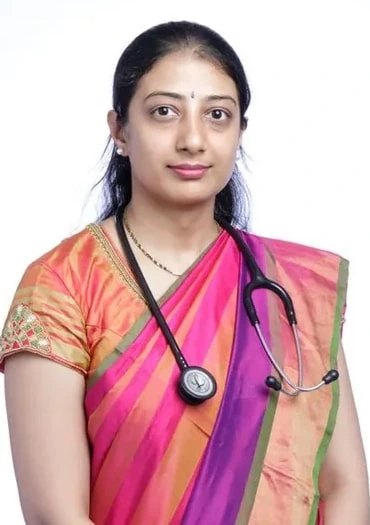
Dr Shaivalini Kamarapu – IVF & Fertility Specialist

Gynecologist, Fertility Specialist, Robotics & Laparoscopy Surgeon

About Dr Shaivalini Kamarapu (IVF Specialist)
  • Dr. Shaivalini Kamarapu is a highly experienced infertility specialist at AMVI Hospital, Hyderabad, with over 20 years of expertise in male and female reproductive health.
  • She specialises in the diagnosis and treatment of varicocele-related male infertility, offering personalised, evidence-based care for men with low sperm count, poor sperm motility, and abnormal semen parameters.
  • Her clinical expertise includes comprehensive male infertility evaluation, hormonal profiling, advanced semen analysis, and interpretation of scrotal Doppler ultrasound for accurate varicocele diagnosis and grading.
  • Dr. Kamarapu has extensive experience managing complex fertility cases, including varicocele associated with azoospermia, repeated IVF failures, and unexplained male infertility.
  • She provides expert guidance on varicocele treatment options, including conservative management, surgical referral for varicocelectomy, and assisted reproductive techniques such as IVF and ICSI, based on individual fertility goals.
  • Known for her ethical and patient-centric approach, she ensures transparent counselling and realistic expectations for couples undergoing treatment for varicocele and infertility in Hyderabad.
  • In addition to male fertility care, she is skilled in laparoscopic surgery and treats associated female fertility conditions such as endometriosis, fibroids, and tubal blockages, helping improve overall reproductive outcomes.
  • Dr. Shaivalini Kamarapu is also a Consultant at Rainbow Hospitals, Apollo Hospitals, and Ankura Hospitals.

How is Varicocele Treated?

Varicocele treatment depends on symptoms, fertility goals, semen quality, and overall health. At AMVI Hospital, treatment plans are individualized for each patient.

Observation and Monitoring

If the varicocele is mild and not causing pain or fertility issues, doctors may recommend regular monitoring. Periodic follow-ups and semen analysis help track any changes. In selected cases, sperm freezing may be advised to preserve fertility before disease progression.

Lifestyle and Supportive Measures

Certain lifestyle adjustments can help reduce discomfort, including:

  • Avoiding prolonged sitting or standing
  • Preventing excessive heat exposure to the testicles
  • Wearing supportive underwear to reduce venous pressure
  • Maintaining proper genital hygiene

These measures are supportive and do not cure varicocele but may relieve symptoms.

Surgical Treatment (Varicocelectomy)

Varicocelectomy is a surgical procedure performed to block or remove the enlarged veins and restore normal blood flow. It is recommended when varicocele causes:

  • Persistent scrotal pain
  • Testicular damage
  • Male infertility

There are multiple surgical approaches, including open surgery, laparoscopic surgery, and microsurgical varicocelectomy, which is widely considered the most effective due to faster recovery and fewer complications.

Assisted Reproductive Techniques (ART)

For men with infertility related to varicocele, assisted reproductive techniques such as IVF or IUI may be recommended. ART is particularly helpful for patients who:

  • Are not suitable candidates for surgery
  • Prefer non-surgical treatment options
  • Require immediate fertility solutions

How to Prevent Varicocele?

Although varicocele cannot always be prevented, certain steps may help reduce the risk or limit symptom progression:

  • Avoid long periods of sitting or standing to reduce pressure on scrotal veins
  • Minimize heat exposure to the genital area; avoid placing laptops on the lap and limit sauna or steam bath use
  • Wear supportive underwear to improve scrotal support and circulation
  • Follow a healthy lifestyle with regular exercise and a balanced diet to maintain good vascular health

Why choose Amvi hospital For Varicocele treatment

Experienced & Trusted Medical Specialists

In Vitro Fertilization in Hyderabad

Advanced Multispecialty Healthcare Services

In Vitro Fertilization in Hyderabad

State-of-the-Art
Medical Technology

In Vitro Fertilization in Hyderabad

Comprehensive Care
Under One Roof

In Vitro Fertilization in Hyderabad

Personalised Treatment Plans for Every Patient

In Vitro Fertilization in Hyderabad

Patient-First Treatment Approach

In Vitro Fertilization in Hyderabad

Comfortable Hospital Infrastructure & Facilities

In Vitro Fertilization in Hyderabad

Dedicated Support Staff & Patient Care Team

Trusted Hospital for Quality Healthcare Services

Our IVF centers in Hyderabad

Puppalaguda

Attapur

Testimonials

Our IVF treatment at AMVI Hospitals was a positive experience. Dr. Shaivalini Kamarapu explained the entire IVF process clearly and guided us at every stage.

Anjali Reddy

We chose AMVI Hospitals for IVF treatment, and it was the right decision. Dr. Shaivalini Kamarapu’s personalized approach gave us confidence throughout the fertility journey.

Rahul & Sneha Verma

From the first consultation to embryo transfer, the IVF care at AMVI Hospitals was excellent. Dr. Shaivalini Kamarapu was patient, supportive, and very knowledgeable.

Pooja Sharma

IVF treatment was handled professionally with great attention to detail. The staff was kind, and the doctors were very reassuring.

Ritu Agarwal

Choosing this hospital for IVF was the best decision we made. The support and care we received helped us stay positive throughout.

Nikhil & Priya Malhotra

Our blogs related to Varicocele

FAQs related to Varicocele

If a varicocele is mild and not causing pain or fertility issues, it may remain stable without treatment. However, in some men, untreated varicocele can gradually affect sperm quality, testicular health, or cause discomfort over time. Regular monitoring is important.

In adolescents, treatment depends on testicular growth, pain, and ultrasound findings. If there is reduced testicular size or abnormal blood flow, early intervention may be recommended to protect future fertility. Specialists at AMVI Hospital carefully monitor teenage patients before deciding on treatment.

If semen analysis shows reduced sperm count or quality, varicocele treatment may improve fertility outcomes. Even without symptoms, treatment can be beneficial when fertility is a concern. A fertility evaluation at AMVI Fertility & Maternity helps guide this decision.

Improvement in semen parameters usually begins within 3 to 6 months after treatment, as sperm production cycles take time. Continued improvement may be seen up to one year following varicocele repair.

Varicocele is generally not life-threatening, but it can become serious if it affects fertility, causes chronic pain, or leads to testicular damage. Early diagnosis at AMVI Hospital, Hyderabad helps prevent long-term complications.

Yes. In adolescents and young adults, untreated varicocele may interfere with normal testicular development, potentially leading to reduced testicle size on the affected side.

Most patients return to normal daily activities within a few days to one week. Complete recovery after microsurgical varicocelectomy typically takes 2–3 weeks, depending on the individual.

Varicocele does not directly cause erectile dysfunction. However, hormonal changes or stress related to fertility issues may indirectly affect sexual health. Treating varicocele often improves overall reproductive confidence.

You can schedule an IVF consultation at AMVI Hospital at the Attapur or Puppalguda location by contacting the hospital directly and sharing any previous fertility records.

Looking for Expert Medical Care? Book an Appointment Today!