





AMV Hospitals

Low AMH Treatment in Hyderabad

Years of Experience
0 +
Successful Surgeries
0 +
Happy Families
0 +

What Is AMH?

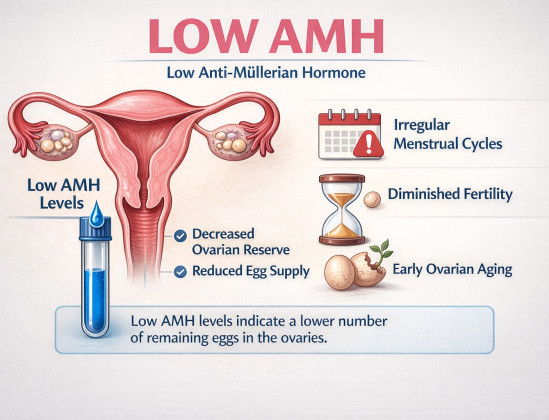
Anti-Müllerian Hormone (AMH) is a hormone produced by the small developing follicles in a woman’s ovaries. These follicles contain immature eggs, and the AMH level in the blood reflects the number of eggs remaining in the ovaries, also known as ovarian reserve. The AMH test is widely used in fertility evaluation to assess reproductive potential and to guide pregnancy planning.

AMH plays an important role in understanding a woman’s fertility status. Higher AMH levels generally indicate a better ovarian reserve, while lower levels suggest a reduced number of available eggs. Unlike other reproductive hormones, AMH levels remain relatively stable throughout the menstrual cycle, making it a reliable marker for fertility testing at any time of the month.

Low AMH does not mean a woman cannot conceive. It simply indicates that the number of remaining eggs is lower than expected for her age. Many women with low AMH still achieve pregnancy naturally or with appropriate fertility support. Early AMH testing helps in timely fertility planning and better treatment outcomes.

Low AMH
normal range Low AMH

What are normal & low AMH levels?

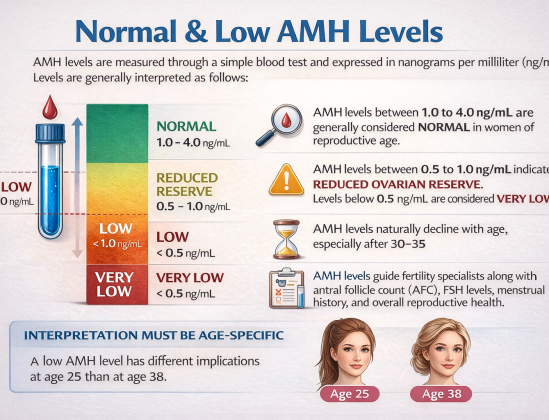
AMH levels are measured through a simple blood test and are expressed in nanograms per milliliter (ng/mL). In women of reproductive age, AMH levels between approximately 1.0 to 4.0 ng/mL are generally considered normal. Levels above this range may sometimes be seen in conditions such as PCOS, while levels below 1.0 ng/mL are typically considered low.

AMH levels between 0.5 to 1.0 ng/mL indicate reduced ovarian reserve, and levels below 0.5 ng/mL are often categorized as very low. However, interpretation of AMH results must always be age-specific. A low AMH level at 25 years of age may have different implications than the same level at 38 years of age.

AMH levels naturally decline as a woman ages, particularly after the age of 30–35 years. A low AMH level suggests a decreased number of eggs but does not directly measure egg quality. Fertility specialists usually evaluate AMH along with antral follicle count (AFC), FSH levels, menstrual history, and overall reproductive health to provide accurate guidance

Causes of low AMH

In Vitro Fertilization in Hyderabad

Age-Related Decline

As women age, especially after 30–35 years, ovarian reserve naturally decreases, leading to lower AMH levels.

Genetic Factors

Some women may have a genetically lower ovarian reserve or a family history of early menopause.

Previous Ovarian Surgery

Surgery for ovarian cysts, endometriosis, or other ovarian conditions can reduce egg reserve.

Chemotherapy or Radiation

Cancer treatments can damage ovarian follicles and significantly lower AMH levels.

Endometriosis

Severe endometriosis can affect ovarian function and reduce AMH levels.

Autoimmune Disorders & Lifestyle Factors

Autoimmune diseases, smoking, excessive stress, obesity, and poor diet may negatively impact ovarian reserve.

Symptoms & signs of low AMH

Low AMH itself does not cause direct symptoms, but women may experience:

  • Difficulty conceiving
  • Delayed pregnancy
  • Irregular menstrual cycles
  • Shorter menstrual cycles
  • Poor response to IVF stimulation
  • History of early menopause in family
  • Reduced antral follicle count on ultrasound
  • Previous failed IVF cycles
  • Hormonal imbalance symptoms
  • Signs of premature ovarian insufficiency

Low AMH: does it affect pregnancy?

Diagnosis of low AMH

Diagnosing low AMH is not based on just one test. It requires a proper and complete fertility check-up to understand your ovarian health clearly. Since fertility depends on many factors like age, hormones, menstrual cycle, and overall health, doctors perform a detailed evaluation before giving any conclusion. The goal is to understand your egg reserve and plan the right treatment at the right time.

This is the main test to check ovarian reserve. It is a simple blood test that can be done on any day of your menstrual cycle. Unlike other hormones, AMH levels do not fluctuate much during the month. The result shows how many eggs are likely remaining in your ovaries. Low AMH means the egg reserve is reduced, but it does not mean pregnancy is impossible.

This test is done through a transvaginal ultrasound, usually on Day 2 or Day 3 of the period. The doctor counts the small follicles (tiny sacs that contain eggs) in both ovaries. The number of these follicles gives a clear idea about your ovarian reserve. Lower follicle count usually matches low AMH levels.

FSH stands for Follicle Stimulating Hormone. This hormone helps the ovaries grow eggs. If FSH levels are high, it may mean the ovaries are not responding well. Doctors compare FSH levels with AMH to get a better understanding of ovarian function.

LH and Estradiol are other important reproductive hormones. These are checked to see if ovulation is happening properly. Hormone imbalance can affect egg development and menstrual cycles. These tests help doctors understand overall ovarian activity.

Many women in India have thyroid issues, which can affect fertility. A thyroid test checks if hormone levels are normal. High prolactin levels can also disturb ovulation. Treating thyroid or prolactin problems can improve fertility naturally in some cases.

The doctor will ask about your age, menstrual cycle pattern, previous pregnancies, miscarriages, surgeries, lifestyle habits, stress levels, and family history of early menopause. This helps in understanding the complete picture and identifying possible causes of low AMH

Fertility is not only about the woman. In couples, semen analysis of the male partner is also important. Sometimes both partners may have mild fertility issues, and treating both improves success chances.

About doctor

Dr Shaivalini Kamarapu – IVF & Fertility Specialist

Gynecologist, Fertility Specialist, Robotics & Laparoscopy Surgeon

About Dr Shaivalini Kamarapu (IVF Specialist)
  • Dr. Shaivalini Kamarapu is a highly experienced infertility specialist at AMVI Hospital, Hyderabad, with over 20 years of expertise in women’s reproductive health and advanced fertility care.
  • She specializes in the evaluation and treatment of low AMH (Anti-Müllerian Hormone) and diminished ovarian reserve, providing personalized and evidence-based fertility solutions.
  • Her clinical expertise includes detailed ovarian reserve assessment through AMH testing, Antral Follicle Count (AFC), hormonal profiling, and comprehensive fertility evaluation to determine reproductive potential.
  • Dr. Kamarapu is skilled in designing customized ovarian stimulation protocols for women with low AMH to improve egg retrieval and enhance IVF success rates.
  • She has extensive experience in managing poor ovarian response, recurrent IVF failures, and complex infertility cases associated with low AMH.
  • Her treatment approach may include ovulation induction, advanced IVF techniques, ICSI, embryo freezing, and fertility preservation options such as egg freezing.
  • She provides expert counselling for women with very low ovarian reserve and guides them through all available options, including advanced reproductive technologies when required.
  • Known for her ethical, transparent, and patient-centred approach, she offers realistic expectations and individualized treatment plans.

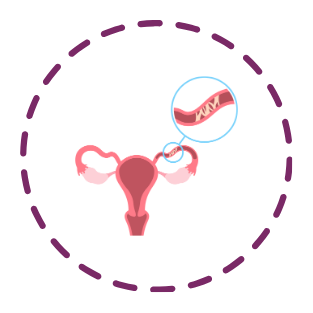
 

Treatment for low AMH

Treatment for low AMH depends on age, ovarian reserve, and pregnancy goals. The approach is personalized to improve the chances of conception.

Natural Conception with Monitoring

Younger women with mildly low AMH may try naturally with ovulation tracking and timed intercourse.

Ovulation Induction

Medicines like Letrozole or Clomiphene are used to stimulate egg release and improve pregnancy chances.

Controlled Ovarian Stimulation

Hormonal injections help produce multiple eggs, especially before IUI or IVF.

IVF (In Vitro Fertilization)

IVF is commonly recommended in moderate to severe cases. Eggs are collected, fertilized in the lab, and the embryo is transferred to the uterus.

ICSI

A single sperm is injected directly into the egg during IVF to improve fertilization.

Mild Stimulation IVF

Lower-dose medicines are used in some cases to focus on egg quality.

Embryo Freezing

Embryos can be frozen for future transfer to increase overall success chances.

Egg Freezing

Women can freeze eggs early to preserve fertility for the future.

Donor Egg IVF

In very low ovarian reserve cases, donor egg IVF may be suggested after proper counseling.

Symptoms & signs of low AMH

Low AMH itself does not cause direct symptoms, but women may experience:

  • Follow all prescribed medications strictly as advised.
  • Do not skip hormonal injections or fertility tablets.
  • Avoid heavy lifting and strenuous physical activity.
  • Maintain adequate hydration daily.
  • Eat balanced and nutritious meals.
  • Avoid smoking and alcohol completely.
  • Limit caffeine intake.
  • Get at least 7–8 hours of sleep every night.
  • Manage stress through relaxation techniques.
  • Avoid exposure to environmental toxins.
  • Attend all follow-up appointments.
  • Monitor for unusual symptoms such as severe pain or bleeding.
  • Avoid self-medication.
  • Maintain a positive mindset during the treatment cycle.
  • Consult your doctor immediately if you experience discomfort after embryo transfer.

Lifestyle and dietary recommendations

A healthy lifestyle supports overall fertility and improves treatment outcomes. Eat a balanced diet rich in antioxidants, including green leafy vegetables, fresh fruits, whole grains, nuts, seeds, and lean proteins. Include omega-3 fatty acids from fish, flaxseeds, and walnuts to support hormonal balance.

Maintain a healthy Body Mass Index (BMI), as being underweight or overweight can affect ovulation. Engage in moderate exercise such as walking or yoga, but avoid excessive workouts. Manage stress through meditation or breathing exercises.

Avoid processed foods, refined sugar, smoking, alcohol, and excess caffeine. Ensure adequate Vitamin D levels and take supplements only under medical guidance. While lifestyle changes may not significantly increase AMH levels, they help improve overall fertility health.

Why choose Amvi hospital For low AMH treatment

Experienced & Trusted Medical Specialists

In Vitro Fertilization in Hyderabad

Advanced Multispecialty Healthcare Services

In Vitro Fertilization in Hyderabad

State-of-the-Art
Medical Technology

In Vitro Fertilization in Hyderabad

Comprehensive Care
Under One Roof

In Vitro Fertilization in Hyderabad

Personalised Treatment Plans for Every Patient

In Vitro Fertilization in Hyderabad

Patient-First Treatment Approach

In Vitro Fertilization in Hyderabad

Comfortable Hospital Infrastructure & Facilities

In Vitro Fertilization in Hyderabad

Dedicated Support Staff & Patient Care Team

Trusted Hospital for Quality Healthcare Services

Our low AMH care centers in Hyderabad

Puppalaguda

Attapur

Testimonials

I was diagnosed with low AMH at 32 and felt very anxious about my fertility. The doctors guided me properly and explained every step clearly. Today, I am happily pregnant. I am truly grateful for the support and treatment.

Priyanka Reddy

After two failed attempts elsewhere, I consulted for low AMH treatment. The personalized IVF plan made a big difference. The care and transparency throughout the process gave us confidence

Swathi N

My AMH levels were very low, and I thought pregnancy was impossible. With the right treatment and guidance, we conceived successfully. The team was supportive and professional.

Anusha K

I appreciated the honest counselling and realistic expectations given during my low AMH treatment. The doctors designed a treatment plan specifically for my condition, and it worked.

Meghana Rao

The doctors carefully evaluated my ovarian reserve and suggested the best IVF approach. Their experience in handling low AMH cases is truly commendable.

Deepika S

From diagnosis to treatment, everything was handled with care and clarity. Even with low AMH, I felt hopeful and supported throughout my fertility journey.

Lakshmi Priya

Our blogs related to low AMH

FAQs related to low AMH

AMH levels below 1.0 ng/mL are generally considered low. However, the interpretation depends on your age, menstrual history, and overall fertility profile.

Yes, natural pregnancy is still possible, especially in younger women. Low AMH indicates reduced egg quantity, not necessarily poor egg quality.

Low AMH may indicate reduced ovarian reserve, but it does not always mean immediate menopause. Proper evaluation is required to understand your reproductive timeline.

Low AMH may result in fewer eggs retrieved during IVF. However, with personalized stimulation protocols and advanced techniques, pregnancy is still achievable.

AMH levels cannot be significantly increased. However, a healthy lifestyle, balanced diet, and proper medical care can improve overall fertility potential.

Women above 30 years, those planning delayed pregnancy, or those facing difficulty conceiving should consider AMH testing.

Doctors usually recommend Antral Follicle Count (AFC), FSH, LH, Estradiol, thyroid tests, and sometimes semen analysis for complete fertility assessment.

No, treatment depends on age and severity. Options may include ovulation induction, natural monitoring, IVF, ICSI, or fertility preservation.

IVF success depends on age, egg and sperm quality, underlying medical conditions, embryo quality, and adherence to the recommended treatment plan.

You can book an appointment by visiting:
👉 https://amvihospitals.com/contact-us/
Or call:
📍 Attapur, Hyderabad – +91 – 80088 42200
📍 Puppalguda – 91 – 91000 09669

Looking for Expert Medical Care? Book an Appointment Today!