






AMV Hospitals

Laparoscopic Hysterectomy Surgery in Hyderabad
Years of Experience
0 +
Successful Surgeries
0 +
Happy Families
0 +

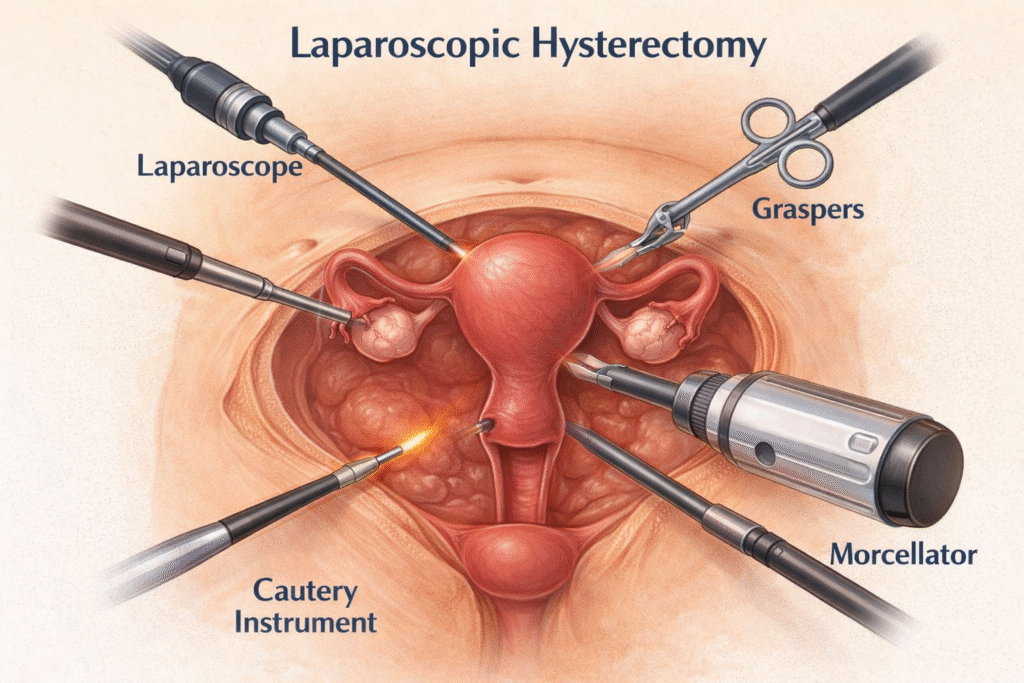
What is laparoscopic hysterectomy ?

Advanced Laparoscopic Hysterectomy is a minimally invasive surgical procedure used to remove the uterus using high-definition laparoscopic instruments and precision surgical techniques. This modern approach offers less pain, minimal blood loss, faster recovery, and shorter hospital stay compared to traditional open hysterectomy surgery.

It is considered one of the safest and most effective methods for treating fibroids, abnormal uterine bleeding, endometriosis, adenomyosis, uterine prolapse, and certain gynecological cancers. Advanced laparoscopic hysterectomy allows women to recover faster while maintaining better cosmetic results and reduced surgical trauma.

Laparoscopic Hysterectomy

What are the indications for hysterectomy surgery?

In Vitro Fertilization in Hyderabad

Uterine fibroids

Large or multiple fibroids that cause severe pelvic pain, pressure symptoms, or heavy menstrual bleeding may require hysterectomy when medications fail.

Abnormal uterine bleeding

Persistent heavy or irregular bleeding that does not respond to hormonal treatment or minor procedures may indicate the need for hysterectomy surgery.

Endometriosis

Severe endometriosis causing chronic pelvic pain and infertility may require Advanced Laparoscopic Hysterectomy when conservative treatment is ineffective.

Gynecological cancers

Early-stage cancer of the uterus, cervix, or ovaries may require hysterectomy as part of cancer treatment.

Adenomyosis

A condition where the uterine lining grows into the muscle wall, causing severe cramps and heavy periods, sometimes requiring surgical removal.

Uterine prolapse

When the uterus descends into the vaginal canal due to weakened pelvic muscles, hysterectomy may be recommended for permanent correction.

Chronic pelvic pain

Long-standing pelvic pain related to uterine pathology that affects daily life and does not improve with medication.

Recurrent pelvic infections

Repeated infections affecting the uterus and surrounding organs may require surgical intervention.

Types of Hysterectomy Surgery

Depending on the patient’s medical condition, age, diagnosis, severity of disease, and long-term health considerations, the gynecologist may recommend a specific type of hysterectomy surgery. The choice of procedure depends on whether only the uterus needs removal or surrounding organs such as cervix, ovaries, fallopian tubes, lymph nodes, or nearby tissues are also involved.

There are five major types of hysterectomy surgery:

  • Total Hysterectomy
  • Subtotal (Partial) Hysterectomy
  • Pan Hysterectomy
  • Radical Hysterectomy
  • Ultra-Radical (Extensive) Hysterectomy

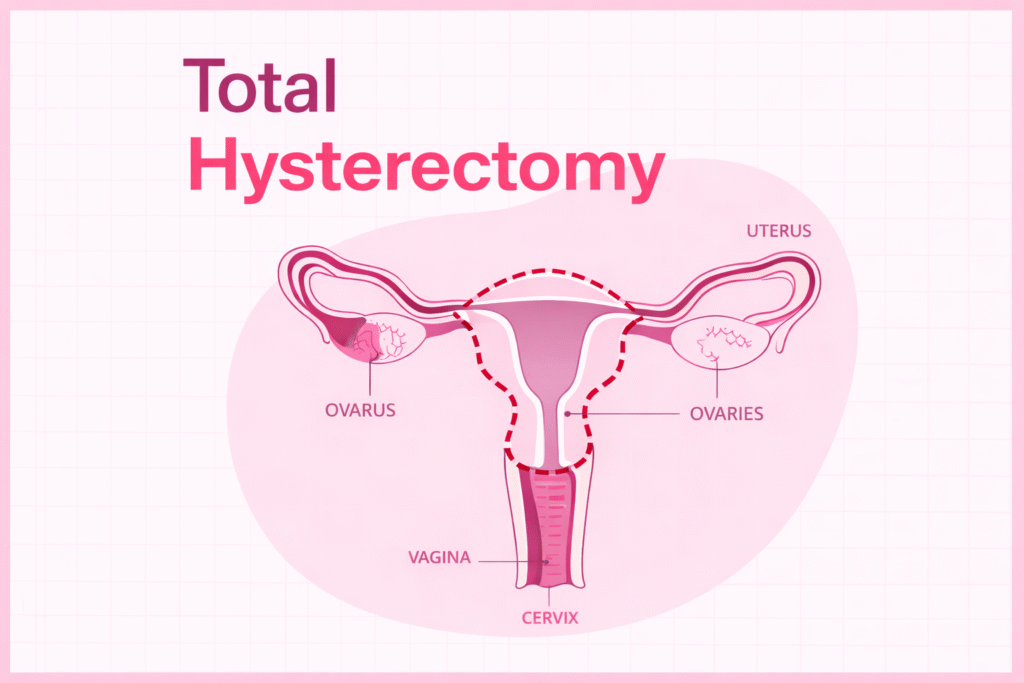
Total Hysterectomy

Total hysterectomy surgery involves complete removal of the uterus along with the cervix. In most cases, the ovaries and fallopian tubes are left in place unless there is a medical reason to remove them.

This is one of the most commonly performed hysterectomy procedures for conditions such as uterine fibroids, abnormal uterine bleeding, adenomyosis, and early-stage gynecological disorders. Total hysterectomy can be performed through total abdominal hysterectomy or total laparoscopic hysterectomy, depending on the patient’s condition and surgical approach. After this surgery, menstruation permanently stops and pregnancy is no longer possible.

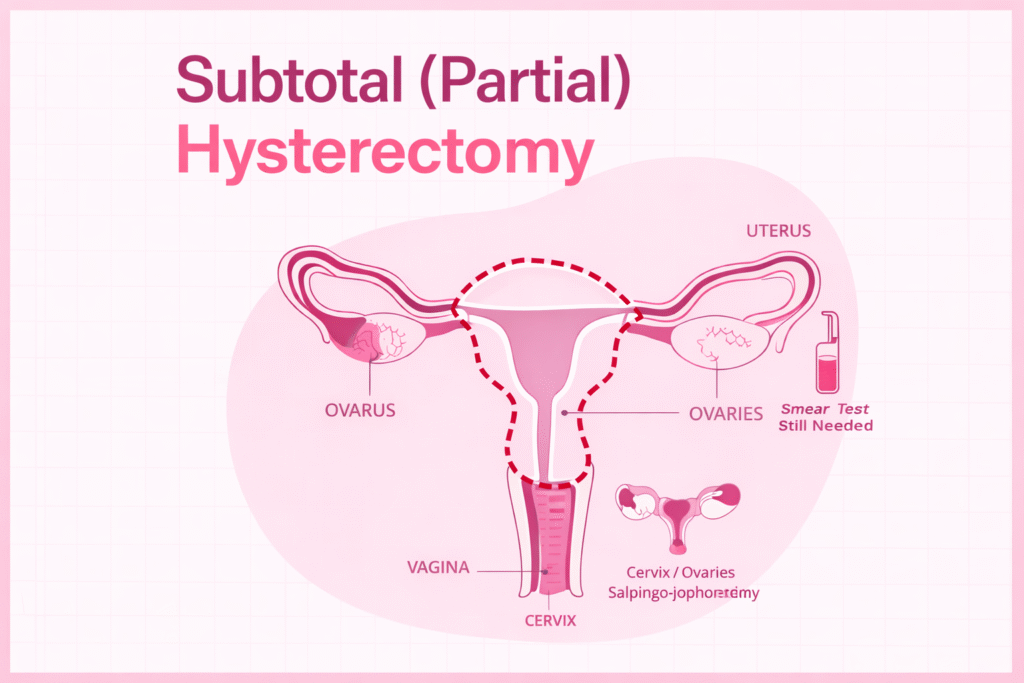
Subtotal (Partial) Hysterectomy

Subtotal (Partial) Hysterectomy

Subtotal hysterectomy, also known as partial hysterectomy, involves removal of the upper portion of the uterus while preserving the cervix. This option may be considered when the cervix is healthy and does not require removal.

Since the cervix remains intact, regular cervical cancer screening (Pap smear tests) must continue after surgery. Subtotal hysterectomy is less commonly performed compared to total hysterectomy but may be suitable in selected benign cases.

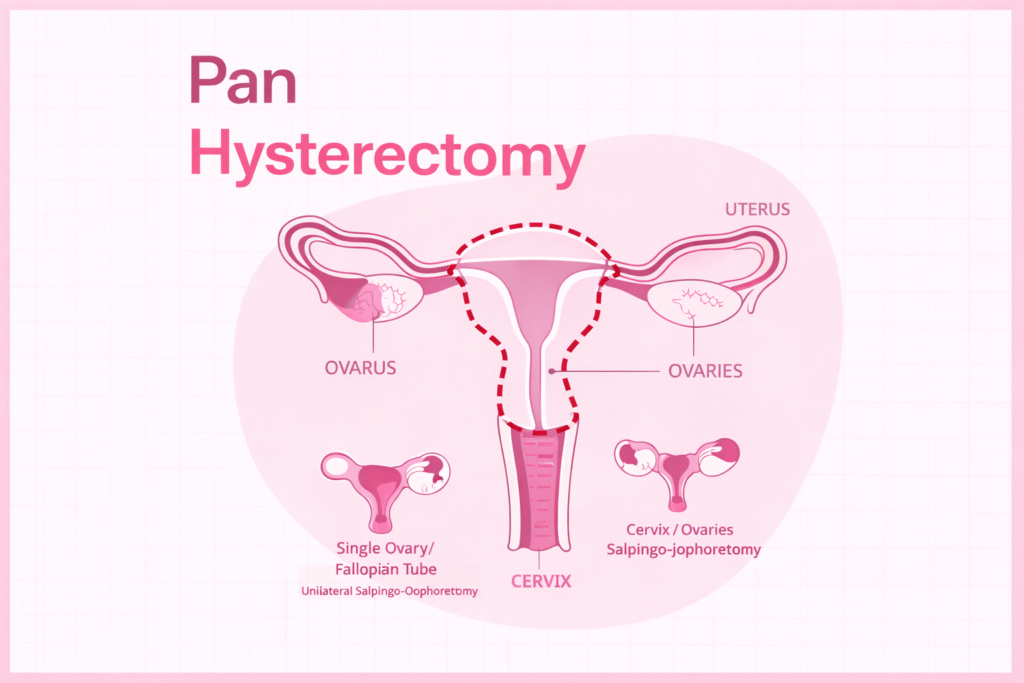
Pan Hysterectomy

Pan Hysterectomy

A pan hysterectomy surgery involves removal of the uterus along with the cervix and may also include removal of the fallopian tubes and ovaries depending on the patient’s pathology.

Based on the patient’s condition, surgeons may recommend one of the following types:

This procedure involves removal of the uterus and cervix along with the fallopian tubes and ovaries.

It is of two types:

  • Total Hysterectomy with Unilateral Salpingo-Oophorectomy
  • Total Hysterectomy with Bilateral Salpingo-Oophorectomy
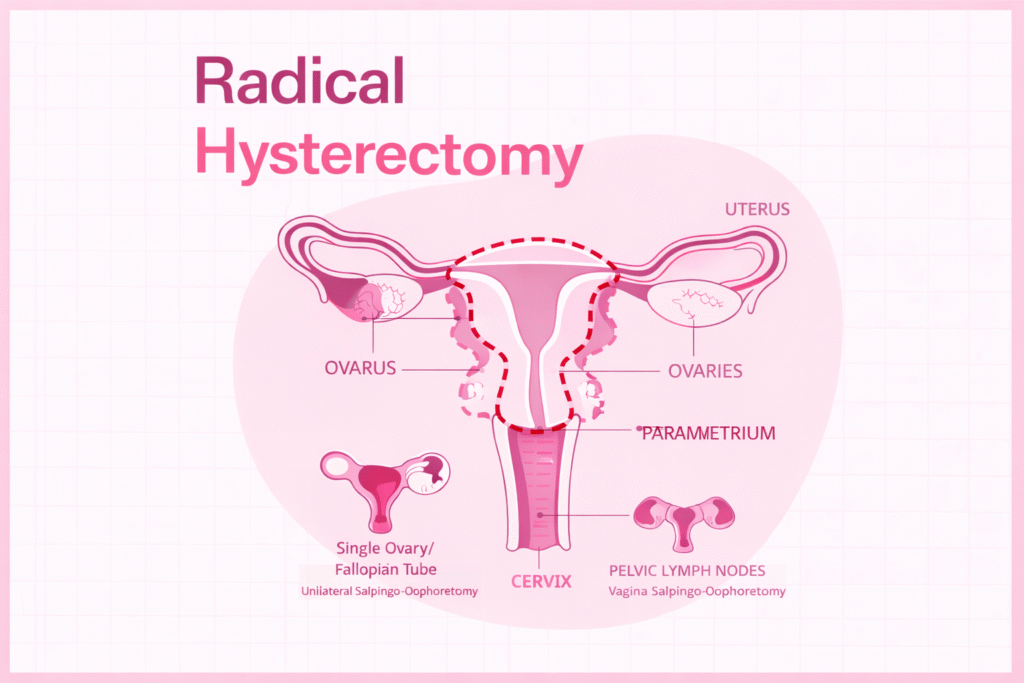
Radical Hysterectomy

Radical Hysterectomy

A radical hysterectomy surgery involves removal of the entire uterus, cervix, surrounding supportive tissues (parametrium), pelvic lymph nodes, and the upper portion of the vagina.

This procedure is primarily performed in cases of gynecological cancers such as cervical cancer or early-stage uterine cancer. Radical hysterectomy may be performed through open surgery or laparoscopic radical hysterectomy depending on the stage and spread of cancer.

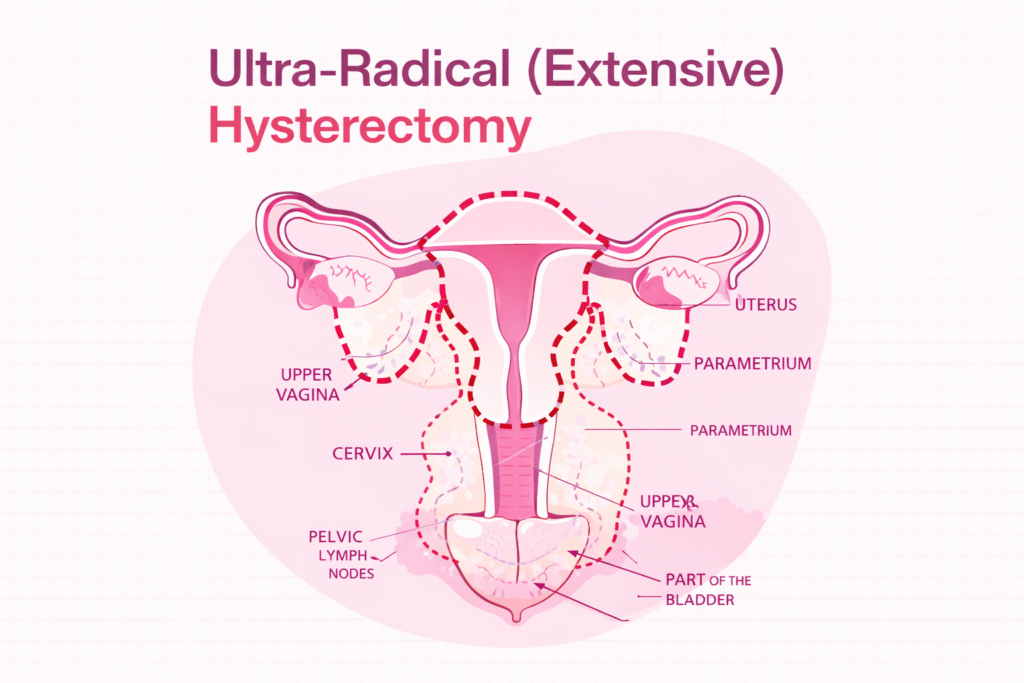
Ultra-Radical (Extensive) Surgery

Ultra-Radical (Extensive) Surgery

An ultra-radical (extensive) hysterectomy involves removal of the uterus, cervix, surrounding tissues (parametrium), pelvic lymph nodes, upper vagina, and may also include removal of parts of the bladder and rectum.

This complex surgery is generally performed when gynecologic cancers are in an advanced stage and require extensive surgical management to control disease spread.

Methods of Hysterectomy Surgery

Several factors influence the choice of hysterectomy surgery for benign (non-cancerous) conditions. These include the size and shape of the uterus, vaginal accessibility, extent of disease, need for additional procedures, urgency of treatment, overall health status, and patient preference.

Abdominal Hysterectomy: In this method, the uterus is removed through an incision made in the lower abdomen. It is usually recommended for large fibroids, enlarged uterus, or when cancer is suspected. Recovery time is generally longer compared to minimally invasive techniques.

Laparoscopic Hysterectomy: This is a minimally invasive procedure performed using small abdominal incisions and a camera. It offers less pain, minimal scarring, shorter hospital stay, and faster recovery.

Robotic Hysterectomy: Robotic-assisted hysterectomy uses advanced robotic technology for improved precision and better visualization. It is often chosen for complex cases and provides faster recovery with minimal complications.

Laparoscopically Assisted Vaginal Hysterectomy (LAVH): LAVH combines laparoscopy and vaginal surgery. The uterus is detached laparoscopically and removed through the vagina. It avoids large abdominal incisions and allows quicker healing.

Vaginal Hysterectomy: In this approach, the uterus is removed entirely through the vagina without external incisions. It is commonly recommended for uterine prolapse and certain benign conditions. Recovery is usually quicker with no visible scars.

Benefits of laparoscopic hysterectomy surgery

Laparoscopic Hysterectomy is considered one of the most advanced and patient-friendly approaches for uterus removal. Compared to traditional open abdominal hysterectomy, this minimally invasive procedure offers multiple medical and recovery advantages.

Smaller incisions and minimal scarring

Reduced post-operative pain

Shorter hospital stay

Faster recovery and early return to normal activities

Lower risk of infection

Less blood loss during surgery

Who needs IVF treatment ?

Infertility has been estimated to affect more than 7 million people in the United States alone. Many individuals or couples can be treated with less aggressive measures. However, when these more conservative measures fail or in circumstances in which they are not appropriate, IVF may become necessary.

Step-by-step procedure of advanced laparoscopic hysterectomy

Before surgery, the patient undergoes medical evaluation including blood tests, scans, and fitness assessment. The doctor explains the procedure, possible risks, and recovery expectations. Fasting for 6–8 hours before surgery is required.

The procedure is performed under general anesthesia, meaning the patient remains completely asleep and pain-free throughout the surgery.

The surgeon makes 3–4 small incisions in the lower abdomen. A laparoscope (thin camera) is inserted to provide a clear internal view of the uterus and surrounding organs.

Using advanced laparoscopic instruments, the uterus is carefully separated from surrounding ligaments and blood vessels. The uterus is then removed either through the vagina or via small abdominal incisions, depending on the case.

The surgeon checks for bleeding, ensures surrounding organs are safe, and closes the small incisions with sutures or surgical glue. The patient is then shifted to recovery for monitoring.

About doctor

Dr Shaivalini Kamarapu – Laparoscopic Hysterectomy Specialist

Gynecologist, Fertility Specialist, Robotics & Laparoscopy Surgeon

About Dr Shaivalini Kamarapu ( Laparoscopic Hysterectomy Specialist)
  • Dr. Shaivalini Kamarapu is a highly experienced gynecologist and laparoscopic surgeon with over 20 years of expertise in advanced women’s health and minimally invasive gynecological procedures.

  • She specializes in performing Laparoscopic Hysterectomy, offering safe, minimally invasive removal of the uterus with faster recovery and minimal post-operative discomfort.

  • Her surgical expertise includes Total Laparoscopic Hysterectomy (TLH), Laparoscopic Assisted Vaginal Hysterectomy (LAVH), and management of complex gynecological conditions requiring hysterectomy.

  • She has extensive experience in managing cases such as fibroids, adenomyosis, endometriosis, abnormal uterine bleeding, uterine prolapse, and chronic pelvic pain through advanced laparoscopic techniques.

  • Dr. Kamarapu follows a patient-centric and ethical approach, ensuring detailed counselling, clear explanation of surgical options, and evidence-based treatment planning before recommending hysterectomy.

  • She is highly skilled in advanced laparoscopy, ensuring minimal blood loss, smaller incisions, reduced hospital stay, quicker recovery, and better cosmetic outcomes for patients undergoing laparoscopic hysterectomy.


Recovery & aftercare

covery after Advanced Laparoscopic Hysterectomy is typically faster compared to traditional abdominal hysterectomy.

Patients are encouraged to walk within 12–24 hours after surgery to improve circulation and prevent blood clots. Mild pain or discomfort is common and managed with prescribed medications. Most patients are discharged within 1–2 days.

Light daily activities can usually be resumed within one week. Heavy lifting and strenuous exercise should be avoided for at least 4–6 weeks. Proper wound care is essential to prevent infection. Maintaining a healthy diet rich in protein helps in faster healing.

Follow-up visits are important to monitor recovery progress. Most women can return to office work within 2–3 weeks depending on their health condition.

Risks & safety of advanced laparoscopic hysterectomy

Every surgical procedure carries some risks, although Advanced Laparoscopic Hysterectomy is generally safe.

  • There may be minor bleeding during surgery.
  • Infection can occur but is rare with proper antibiotics.
  • Injury to nearby organs like bladder or bowel is uncommon.
  • Anesthesia-related complications are very rare.
  • Blood clots may develop in rare cases.
  • Temporary urinary issues may occur after surgery.
  • Mild shoulder pain can occur due to laparoscopic gas.
  • Internal scar tissue formation is possible but uncommon.
  • Hormonal changes may occur if ovaries are removed.
  • Early menopause may occur in selected cases.
  • Emotional changes are possible after hysterectomy.
  • Proper surgical expertise significantly reduces complication rates.
  • Following post-operative instructions minimizes risks further.
  • Advanced technology enhances safety and surgical precision.

Before & after / preparation guide

Why choose Amvi hospital For Laparoscopic Hysterectomy treatment

Experienced & Trusted Medical Specialists

In Vitro Fertilization in Hyderabad

Advanced Multispecialty Healthcare Services

In Vitro Fertilization in Hyderabad

State-of-the-Art
Medical Technology

In Vitro Fertilization in Hyderabad

Comprehensive Care
Under One Roof

In Vitro Fertilization in Hyderabad

Personalised Treatment Plans for Every Patient

In Vitro Fertilization in Hyderabad

Patient-First Treatment Approach

In Vitro Fertilization in Hyderabad

Comfortable Hospital Infrastructure & Facilities

In Vitro Fertilization in Hyderabad

Dedicated Support Staff & Patient Care Team

Trusted Hospital for Quality Healthcare Services

Our Laparoscopic Hysterectomy centers in Hyderabad

Puppalaguda

Attapur

Testimonials

I underwent Laparoscopic Hysterectomy surgery at AMVI Hospital, Attapur, under Dr. Shaivalini Kamarapu. The procedure was smooth, and I was discharged within two days. My recovery was quick with minimal pain and very small scars. I highly recommend AMVI Maternity and IVF Hospital for advanced laparoscopic hysterectomy.

Anjali Reddy

I chose AMVIHospital, Puppalaguda, for my Advanced Laparoscopic Hysterectomy. Dr. Shaivalini Kamarapu explained everything clearly and made me feel confident about the surgery. The hospital care was excellent, and I returned to normal activities within weeks.

Kavitha Sharma

My experience with Laparoscopic Hysterectomy surgery at AMVI Hospital was very positive. The team at the Attapur branch was supportive and professional. Thanks to Dr. Shaivalini Kamarapu, my surgery was safe and recovery was faster than I expected.

Sneha Rao

I was worried about undergoing hysterectomy surgery, but at AMVI Hospital, Puppalaguda, I felt completely cared for. The minimally invasive laparoscopic hysterectomy helped me recover quickly. I am grateful to Dr. Shaivalini Kamarapu and the entire team.

Priyanka Verma

Choosing this hospital for IVF was the best decision we made. The support and care we received helped us stay positive throughout.

Nikhil & Priya Malhotra

Our blogs related to Laparoscopic Hysterectomy

FAQs related to Laparoscopic Hysterectomy

The procedure usually takes between 1 to 3 hours, depending on the size of the uterus, fibroids, endometriosis, or other medical conditions.

Most patients at AMVI Maternity and IVF Hospital are discharged within 24–48 hours after laparoscopic hysterectomy surgery.

Yes, it is considered a safe and effective procedure when performed by experienced surgeons. At AMVI Hospital, advanced laparoscopic technology ensures reduced complications and better outcomes.

Light activities can begin within a few days. Complete recovery generally takes 4–6 weeks depending on individual health and surgical complexity.

Yes, in many cases, ovaries can be preserved if medically appropriate. Preserving ovaries helps maintain hormonal balance and prevents early menopause.

AMVI Hospital has two convenient locations:
AttapurPillar No. 160, 3rd Floor, Survey No. 369, Plot No. 267/268, Rajendra Nagar Rd, Attapur, Telangana 500048

PuppalagudaHallmark Empyrean Commercial Complex Narsingi-Puppalaguda Main Road Puppalaguda, Puppalaguda – Manikonda Main Rd, opposite to Sloka school, Hyderabad, Telangana 500089

Both branches offer advanced laparoscopic hysterectomy consultation and treatment.

You can book an appointment for Laparoscopic Hysterectomy consultation by:
Attapur: 80088 42200
Puppalaguda: 91000 09669
• Emailing: amvihospitals@gmail.com
• Contact Us – https://amvihospitals.com/contact-us/
Early consultation ensures proper diagnosis and personalised treatment planning.

Looking for Expert Medical Care? Book an Appointment Today!